
As Year 2025 becomes history, there is a need to attempt a forensic analysis of this momentous year, in which Nigeria suffered its first “invasion” by a foreign power since its flag independence in 1960. While the United States of America’s intervention in the killing field that Nigeria has become is welcome, it is nonetheless a violation of our sovereignty, regardless of the esoteric language that aims to make it look harmless.
We have tried to own the assault by calling it a “collabo”, as they say, but no one can deny that we did not ask for it, and that it was rammed down our throats. All the same, we deserve the humiliation because we could not put our own house in order. The late President Muhammadu Buhari and his ethnic Fulani collaborators did this to us! But as a country, we failed to do the needful.
For many years before this “help” from President Donald Trump, the warning had rang out again and again that our country was tottering towards a failed state. We were on the dangerous road to Somalia. We were enraged, and justifiably so, when Trump first called us a “shithole”, but he was right! Unfazed by our protests, the maverick American president returned later to describe our country as a “disgraced country.” Again, was he far from the truth?
Once a country fails to perform the basic duties of a state, which are the defence of its territorial integrity and protection of the life and property of its citizens, it loses its sovereignty, respect, and standing in the comity of nations. Therefore, Trump’s action was not the cause of Nigeria’s loss of sovereignty but the evidence and confirmation of the loss. We lost it long before Trump moved in to take advantage.
Insecurity has made life miserable for Nigerians in the last 10 years. What started as a mild Boko Haram insurgency restricted to the north-east of the country ballooned with the coming to power of Buhari in 2015. Fulani terrorists, imported from around the world and empowered by the Buhari administration, ran riot all over the country. Miyetti Allah, the apex organisation of Fulani herders, became the country’s unofficial powerhouse.
All manner of atrocities committed by the Fulani were tacitly sanctioned and applauded by leading Buharists of the Fulani extraction. More terrorist groups saw the opportunity offered by Buhari and seized it with both hands. Fulani bandits, Islamic State of West Africa Province, Ansaru, Lakurawa, name them! Nigeria is swarmed with all manner of terrorist organisations that have spread their tentacles from the north-east to the north-west, north-central and are now marching ferociously down south. Now and again, they control territories bigger than some countries in Europe, where they establish their “governments” and levy taxes on the locals.
In this, they are encouraged, supported, financed, and defended by Fulani/Muslim sympathisers in and out of government, according to reports long known to the public. The military, deliberately compromised from the inside with the infusion of so-called “repentant terrorists”, bled profusely but was unable to stem the tide of the rampage fast consuming the entire country.
The cost of this insurgency is staggering. Human life is lost, and the displaced are counted in hundreds of thousands. Funds and other resources committed so far are counted in trillions of Naira. The dislocation of farmers has led to a scarcity of foodstuffs and soaring costs of living. For the very first time, the country is experiencing the scourge of Internally Displaced Persons. The cost to the economy of the entire country cannot be adequately calculated.
Entire families are routinely wiped out by Fulani land grabbers. Whole villages and communities have emptied into IDP camps, with strangers taking over their land. In many instances, places, and locations, there have been pogroms and ethnic cleansing and genocidal acts against Christians and moderate Muslims. The bestiality of the terrorists makes a mockery of the atrocities recorded in Vietnam, Kigali and Kosovo!
Kidnapping for ransom is now not only a lucrative and profitable business, reportedly rivalling crude oil sales and Diaspora remittances, but it has also become contagious, spreading all over the country. Families, friends, co-workers, and relations now kidnap one another to make quick bucks. People organise or fake their own kidnapping to extort families, friends and relations. My suspicion is that the crime enterprise foisted on the country by insurgency will remain a fact of our national life for a long time to come.
The soaring cost of living cuts across. The cost of foodstuffs is one. After life, man’s next basic need is food. Mercifully, the prices of some food items, like imported rice, have come down, but not down enough to succour the desperately poor. What comfort is it to a man earning the minimum wage of N70,000 per month that a bag of imported rice now sells for N60/70,000 instead of the previous N100/120,000? Besides, the cost of other items, especially condiments like tomatoes, pepper, onions, oils, etc, is not only still high, but they have risen drastically during the festive period.
Transportation costs, too, experienced a jump despite that there were no instances of fuel shortage or an increase in pump price. How do neighbouring countries like the Benin Republic, Togo and Ghana prevent the indiscriminate hike of prices, especially by transporters, which has become commonplace here? Once it is the festive period, they hike fares because they want to rake in “owo odun” (festive period windfall). Once it looks like it will rain, they double fares. Once they see a crowd at bus stops, they announce an increase!
Petrol is more readily available these days, but the cost is still prohibitive. Despite that the refineries are now supplied locally and also pay for crude in the local currency, we still pay through the nose for petrol/diesel. A pastor-colleague who danced that the coming of Dangote refinery would crash the price below the N145/litre in place before the “subsidy is gone” announcement is still dazed that his “prophecy” did not come to pass! Truth be told, what is paid for fuel bores holes in the pocket.
The floating of the Naira or merging of the official and black-market rates of the foreign exchange market is a mere euphemism for a drastic devaluation of the Naira. The Naira’s loss in value is staggering. Fill your pocket with Naira and go shopping; you will return thinking you lost money! I kept a diary, dutifully recording my spending before I could convince myself I wasn’t losing money! Only that the Naira was the one losing value!
In the face of stagnant income or income unable to move at a quarter of the speed of Naira loss, an increasing number of dependents as a result of unemployment that has reached epidemic level, the standard of living and quality of life have plummeted in many homes, mine included! I want Dipo Onabanjo, who insists I am not poor, to believe this!
Epileptic power supply has not helped matters. Constant power supply is both a necessity and a luxury. Productivity dips in the face of epileptic power supply. Industries and businesses incur staggering costs sourcing alternative power supply, and this additional cost, which makes them less competitive in the international market, they passed on to consumers, thereby further increasing the cost of goods and services.
Businesses relocate to more economically favourable environments, leading to job loss and youth restiveness, with its attendant consequences. More than half of Nigeria’s population is reportedly made up of youths. The JAPA syndrome is further accentuated, leading to loss of skilled manpower, which slows down the growth of the economy, thereby further pauperising the citizenry.
The hospitals are bereft of competent hands. Our institutions of higher learning have followed suit. Apart from the exorbitant cost of treatment and drugs, patients now get appointments running into weeks and months before they can have doctors attend to them in our hospitals. I know those who died while waiting for their appointment date!
Corruption still struts the entire landscape like a colossus. The greed of many of our leaders beggars belief. The insensitivity of many of today’s powers-that-be – and their family members – makes you wonder if they were here when yesterday’s men and women of power acted similarly! Where are those today? “Awon t’o pe’ra won ni nkan pataki a wa won a o ri won mo! Awon da?” Like Orlando Owoh crooned! Will people ever learn from history?
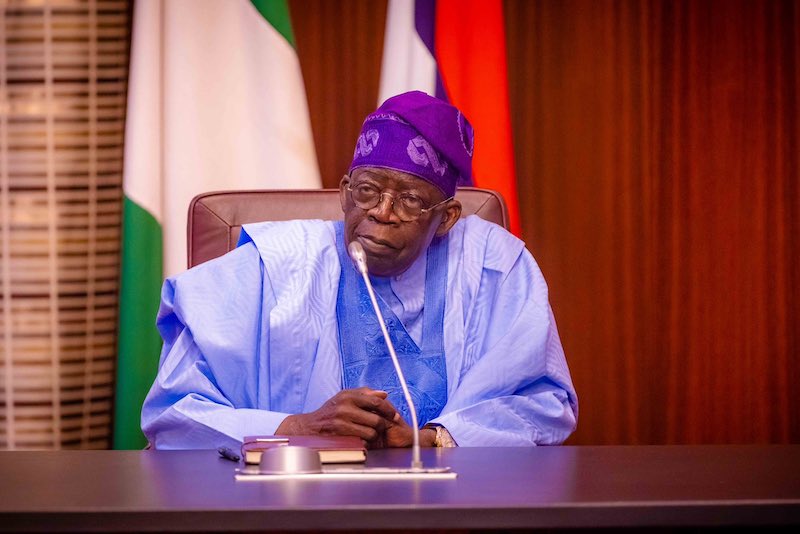
However, 2025 was not all negative, as there was an oasis of renewed hope that President Bola Ahmed Tinubu promised. Mohamed Marwa’s NDLEA, JAMB’s Prof. Ishaq Oloyede, FCCPC’s Tunji Bello, FCT’s Nyesom Wike, the imaginative turnaround at some of our airports and the ease of acquiring passports – all these gave a ray of hope that all is not lost.
Without NDLEA’s dogged fight against drugs, the country would long have become submerged by the drug czars. So, Marwa richly deserves his second term of office.
JAMB suffered a scare in the year under review, but the robust system it has put in place, combined with the doggedness and sincerity of purpose of Oloyede, eventually saved the day. Our exams will by now be worth less than the paper on which they are written without Oloyede.
Government policies apart, man’s inhumanity to fellow humans accounts for much of the suffering in the land. FCCPC’s Riot Acts, read to heartless market men and women over exorbitant price hikes, and to PHCN for billing consumers for services not provided, gave succour to some last year. More such interventions will be required this year.
Wike’s politics may incense many, but Abuja residents describe him as the best performing FCT minister in recent times.
Compared with what operated in the past, the Bayo Onanuga-led media team in the Presidency has been more responsive, having made it a point of duty to constantly touch base with their constituency.
In Year 2026, may their tribe increase! Wishing my esteemed readers a Happy New Year!
Where critics of the Ekiti airport got it all wrong…
Permit me to air my views on the Ekiti agro-allied international cargo airport, if it is not too late. I read your piece on the issue, which was detailed and balanced, in my view, and I also read the rejoinder by US-based Dr. Joel Ademisoye and another anonymous writer. I will also like to remain anonymous for some personal reasons.
Let me state from the beginning that although I am based abroad, like Dr Ademisoye, I am constantly in touch with home. So, I, too, like Dr. Ademisoye, have the privilege of the two fronts of home and away, and how things are done differently in the two worlds.
Critics of the Ekiti airport made good points: Proliferation of airports, scale of preference or priority in the face of competing needs, the gargantuan cost of the airport, the availability of agricultural produce to feed the airport and the sustainability and profitability of the airport itself.
But like you had rightly said in your own write-up, the project was not conceived or started by the current Ekiti State Government of Gov. Biodun Oyebanji. So, the options he had were to continue and complete the project or abandon it. He chose the former, and you supported. I, too, do! Had he abandoned the project, all previous investments in it would have gone down the drain, and the same critics would have criticised him for doing so!
The proliferation of airports is also an issue beyond Oyebanji. He cannot control, influence or stop other states and, indeed, the Federal Government from siting airports. So, we cannot blame him for the proliferation of airports in the South-West. What we should advocate is more synergy by the governors of the south-west region, just as they are now admirably doing on Amotekun, to avoid duplication of projects and waste of resources.
Which should come first: The airport or the resuscitation of moribund Agric projects of the Chief Obafemi Awolowo and Gov. Michael Adekunle Ajasin’s days? I think both can run pari passu. In fact, the existence of the airport serves as a catalyst for investors to move in and partner with the Oyebanji administration to revive those projects. That should be the next focus of the Ekiti governor. Of course, this cannot be achieved without good road networks, especially rural roads, to help farmers move their farm produce closer to the airport.
Critics of the airport overlooked the salient point you raised of insecurity, which has spread from its “home” base in the North to the south-west, which was unthinkable in the past. No investor will feel comfortable to risk his or her life travelling by road in unsafe terrains or environments. With the airport comes safer and faster travels, ease and comfortability, which will help Ekiti to compete more favourably with a neighbouring state like Ogun, which is so blessed because of its nearness to Lagos, the country’s commercial nerve-centre.
The Ekiti airport will shorten the one-way travel distance from Lagos to Ekiti by a whopping four or five hours (to and fro, making a total of between eight and 10 hours), which is massive. In conclusion, the positives outweigh the negatives.
*Former editor of PUNCH newspapers, Chairman of its Editorial Board and Deputy Editor-in-chief, BOLAWOLE was also the Managing Director/Editor-in-chief of The Westerner news magazine. He writes the ON THE Lord’s DAY column in the Sunday Tribune and the ” Treasures ” column in the New Telegraph newspaper on Wednesdays. He is also a public affairs analyst on radio and television.
More Stories
Osun Guber Polls: Lessons from Ekiti – (1)
Banditry, Kidnapping, and the Struggle for Power: Is Nigeria Witnessing A Return of the Old Political Order?
Osun Guber: Matters Arising