

By Labode POPOOLA,
Professor of Forest Economics & Sustainable Development, Executive Secretary-CEO, African Forest Forum, Nairobi, Kenya (Being a paper presented at the 64th Founder’s Day Celebration of St. Patrick’s Grammar School, Orita Bashorun, Ibadan on March 17, 2026)
Historical Perspective
Early Beginnings (Ancient Foundations)
The earliest roots of alumni‑type networks can be traced to ancient Greece, where the schools of Plato and Aristotle fostered an enduring sense of community among students beyond their period of instruction. These early academies cultivated the idea of lifelong learning and communal intellectual engagement.
Medieval Universities (Informal Scholarly Networks)
During the Middle Ages, the rise of universities across Europe (such as Bologna, Paris, Oxford, and Cambridge) nurtured informal graduate networks. Alumni—often clergy or nobility—maintained ties with their institutions, exchanged scholarly ideas, and contributed to the preservation and spread of knowledge across borders
These early networks set the stage for more formal alumni structures, although institutionalized alumni bodies did not yet exist
Emergence of Modern Alumni Associations (18th–19th Century)
The 19th century saw significant educational expansion around the world, prompting the formation of structured alumni associations.
Harvard University established one of the earliest formal alumni associations in the United States in 1823. Harvard’s president Josiah Quincy highlighted the importance of enduring ties between graduates and their university
The Society of Alumni of Williams College, founded in 1821, is often cited as the oldest continuing college or university alumni organization in the world (Wikipedia)
These developments marked the shift from informal gatherings to institutionalized alumni relations..
- Late 20th–21st Century: Globalisation and Digitisation
- Modern alumni associations have become:
- Global networks, with chapters across cities and countries.
- Digitally integrated, using portals, social media, and Customer Relationship
- Management systems.
- Strategic partners in fundraising, branding, student mentorship, and institutional governance.
- They have also grown more inclusive, expanding from “old boy networks” to diverse, multi‑generational bodies that reflect today’s educational landscapes
- Additionally, contemporary analyses highlight that alumni associations evolved from informal gatherings to comprehensive organisations offering career support, networking, philanthropy, and lifelong learning opportunities
Summary
- The history of alumni associations can be viewed through several stages:
- Ancient origins – community learning traditions in Greek academies.
- Medieval informal networks – scholarly connections across early European universities.
- Modern formation (19th century) – first formal alumni bodies in the US.
- Professionalisation (early 20th century) – formation of organised alumni administration structures.
- Institutionalisation (mid‑to late 20th century) – global growth, fundraising, and organisational mergers.
- Digital and global era (21st century) – technology-driven, inclusive, and strategic alumni ecosystems.
Alumni Associations and Their Roles in Educational and Social Development
Alumni associations—groups formed by graduates of educational institutions—are powerful networks that contribute significantly to the growth of schools, universities, communities, and society at large. Beyond maintaining social connections, these associations play transformative roles in educational advancement, social development, career growth, and institutional sustainability.
Strengthening
c. Scholarships and Mentorship
- Many associations:
- Establish scholarship funds for needy/indigent or high-achieving students.
- Create mentorship programmes that link students with experienced professionals.
- Offer career guidance, internships, and job placement support.
2. Fostering Social Capital and Networks
- a. Professional Networking
- Alumni networks create platforms for:
- Job referrals and career mobility.
- Business partnerships and professional collaborations.
- Cross-sector knowledge sharing.
- b. Social Support Systems
- Alumni Associations often:
- Provide emotional, moral, and financial support during crises.
- Create lifelong friendships and social ties.
Assist members in relocation and integration into new communities
3. Driving Community and National Development
- a. Community Outreach
- Alumni groups frequently engage in:
- Community service projects—health camps, environmental clean-ups, literacy drives.
- Philanthropy targeting vulnerable populations.
- Advocacy on issues such as education, environment, and governance.
- b. Economic and Social Empowerment
- They contribute by:
- Incubating entrepreneurial ventures among members.
- Supporting skills development programmes.
- Promoting social cohesion through inclusive initiatives.
4. Supporting Institutional Governance and Reputation
a. Institutional Governance
- Alumni often:
- Serve on boards and advisory councils.
- Offer strategic advice on institutional development.
- Assist in long-term planning and policy formulation.
- b. Enhancing Institutional Image
- Through their achievements, alumni:
- Elevate the institution’s profile locally and globally.
- Attract new students, grants, and partnerships.
- Act as ambassadors, promoting goodwill and credibility.
5. Cultural Preservation and Legacy
- Alumni associations preserve:
- The heritage, traditions, and values of their institutions.
- Historical records, archives, and institutional memory.
- Intergenerational continuity through engagement with current students.
How Institutions Can Strengthen Alumni Engagement
Strong alumni engagement doesn’t happen by accident—it requires intentional structures, consistent communication, and value creation. Below are the most effective strategies institutions use to deepen alumni relationships and sustain long-term engagement.
1. Build a Strong Alumni Database
* A reliable database is the foundation of alumni relations.
* Maintain up‑to‑date contact information.
* Segment alumni by class year, profession, location, interests, etc.
* Use CRM tools to manage communication and track involvement
2. Offer Meaningful Engagement Opportunities
*Alumni want to engage where they feel they add value.
* Invite alumni to mentor students, speak at events, or serve on advisory boards.
* Create volunteer programmes, such as serving as admissions ambassadors or career mentors.
* Offer project-based collaboration—research, industry linkages, innovation hubs.
3. Foster a Culture of Continuous Communication
* Consistent communication builds trust and keeps alumni connected.
* Share newsletters, updates, and success stories.
* Highlight alumni achievements on social media and institutional websites.
* Personalise messages according to alumni interests and history with the
institution
4. Create Professional and Social Networking Platforms
*Alumni networks thrive when they create value for members.
* Host career fairs, networking mixers, and sector‑specific meetups.
* Create online communities (LinkedIn groups, portals, forums).
* Match alumni with job opportunities or consultancy assignments.
5. Organise Events That Encourage Reconnection
* In-person or virtual gatherings strengthen emotional ties.
* Annual alumni reunions, homecoming events, and anniversaries.
* Regional chapter events for alumni abroad or in different cities.
* Webinars, professional masterclasses, and fireside chats.
6. Provide Continuous Learning Opportunities
* Alumni value ongoing professional growth.
* Offer discounted or free short courses, certificates, and executive training.
* Give alumni exclusive access to research resources or libraries.
* Host masterclasses led by internal or alumni experts.
7. Recognise and Celebrate Alumni Contributions
* Recognition increases loyalty.
* Annual alumni awards for leadership, innovation, community service.
* Feature standout alumni in newsletters, magazines, and institution websites.
* Celebrate milestones—graduation anniversaries, career achievements, publications.
8. Strengthen Governance and Alumni Leadership Structures
* Effective engagement needs good leadership.
* Support structured alumni associations with clear mandates.
* Facilitate the creation of class coordinators, regional chapters, and professional clusters
* Involve alumni in institutional planning, board committees, or advisory roles.
9. Provide Transparency and Build Trust
* When alumni trust the institution, they engage more.
* Clearly communicate how donations are used.
* Provide annual impact reports.
* Share strategic plans and progress updates.
10. Create Tailored Fundraising Opportunities
* Fundraising works better when aligned with alumni passions.
* Micro-donation platforms for small, accessible contributions
* Named scholarships, endowments, or classroom sponsorships.
* Peer‑to‑peer fundraising driven by alumni leaders.
9. Provide Transparency and Build Trust
* When alumni trust the institution, they engage more.
* Clearly communicate how donations are used.
* Provide annual impact reports.
* Share strategic plans and progress updates.
10. Create Tailored Fundraising Opportunities
* Fundraising works better when aligned with alumni passions.
* Micro-donation platforms for small, accessible contributions
* Named scholarships, endowments, or classroom sponsorships.
* Peer‑to‑peer fundraising driven by alumni leaders.
11. Leverage Technology
* Technology makes engagement easier and scalable.
* Alumni portals for registration, job boards, and event calendars.
* Mobile apps with push notifications and networking features.
* Data dashboards to track engagement patterns and interests.
* Platforms should not be abused for primordial sentiments.
* Don’t use such platforms to discriminate or show off. Equity is key…
Some case examples of the importance of Alumni Associations…
- The role of Alumni is critical for the development of education the world over. Alumni can provide essential support to students, graduates, young alumni, institutions and society. Alumni are an asset to the university, and their contributions and involvement can significantly increase the university’s reputation nationally and globally.
- Alumni Associations create a space for meaningful interactions among key stakeholders with shared aspirations and experiences, with the primary focus of strengthening relations between students and their alumni and promoting and working for the growth and development of the universities in diverse ways.
- As ambassadors of their alma mater, alumni are vital for revenue mobilisation and placement opportunities for students. Managements of institutions, therefore, have a greater responsibility to promote and facilitate the work of the Alumni Associations to derive maximum mutual benefits.
- Many of the world’s great universities rely on gifts from their Alumni. For example, on an annual basis, up to 30,000 alumni and friends support Harvard’s innovative teaching and research. With gifts ranging from US$1000 to US$25,000, many of the university’s important works are executed.
- Similarly, several of the alumni are engaged in activities that impact the reputation of the university around the world (See Figures 1a to 1d), which help the university to advance its leadership across all areas of human and scientific discovery.
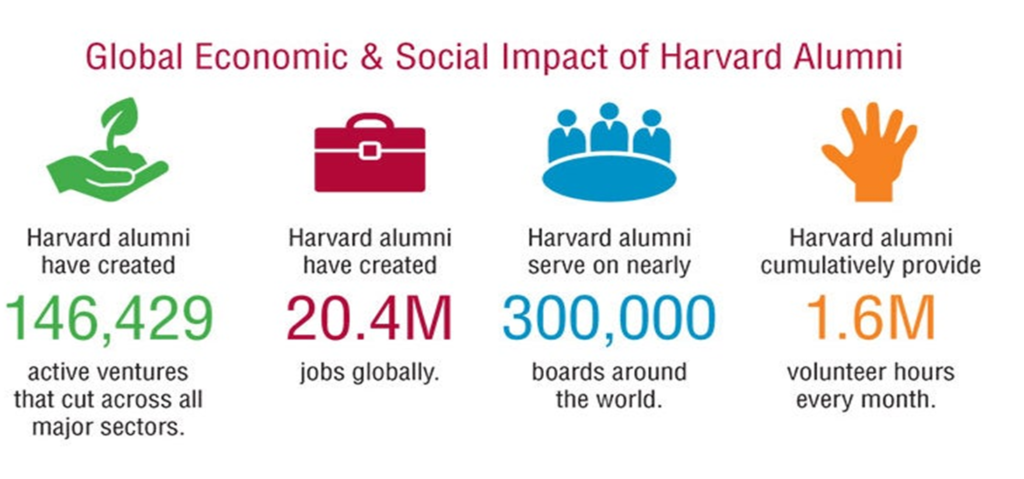
Figure 1a: Global Economic and Social Impact of Harvard Alumni (Source: Harvard University)
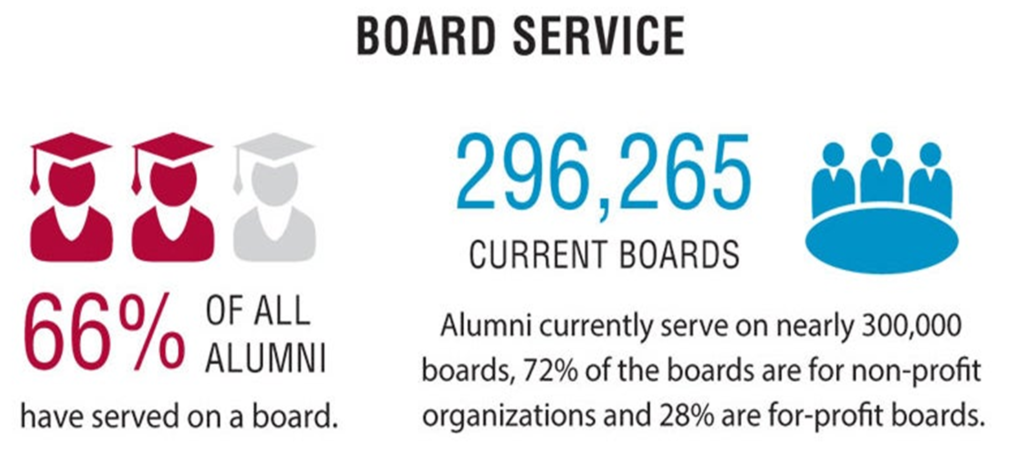
Figure 1b: Board Service by Harvard Alumni (Source: Harvard University)
Figure 1c: Volunteerism by Harvard Alumni (Source: Harvard University)
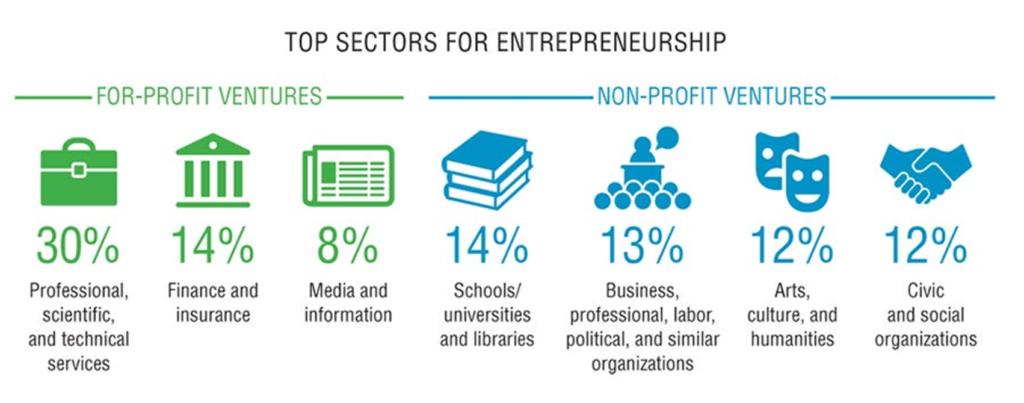
Figure 1d: Top Sectors for Entrepreneurship featuring Harvard Alumni
Source: Harvard University
More Stories
Assessing the Relevance of Traditional Rulers (2)
Assessing the Relevance of Traditional Rulers (1)
MRA Calls for Entries for Goodluck Jonathan FOI Awards 2026