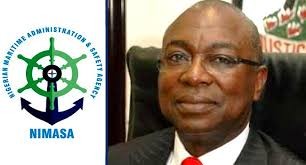
Dr Dayo Mobereola is known for being reserved yet resolute in his beliefs. People who have worked with him frequently praise his determination and his ability to excel in any responsibility entrusted to him. He demonstrates outstanding professionalism, highly values vision and patience, and consistently upholds public etiquette in all his actions.
Maritime industry stakeholders praised him during his first interactive session and expressed high expectations for his leadership. Their confidence reflects his strong reputation and anticipation of significant sector transformation.
He joined the Nigerian Maritime Administration and Safety Agency (NIMASA) after distinguishing himself as the founding Managing Director of the Lagos Metropolitan Area Transport Authority (LAMATA), where he achieved multiple milestones and earned numerous accolades and awards for the organisation.
Within a period of less than two years, he has consistently maintained his record of success at NIMASA. His commitment to enhancing maritime safety has been reflected in various facets of the Agency’s operations, while he has also strengthened collaboration with key stakeholders in the maritime sector.
Under his leadership, NIMASA introduced the PPP model for maritime decarbonisation in Africa by establishing Nigeria’s Maritime Continuous Emission Monitoring System at UNFCCC COP 30 in Balem, Brazil. The presentation at the conference emphasised Nigeria’s support for IMO energy transition efforts through digital innovation. At the conference, NIMASA formally presented the Nigerian Maritime Continuous Emission Monitoring System, developed in collaboration with a team of researchers from the University College London (UCL).
In addition, he enhanced Nigeria’s capacity for advanced ship repairs by assigning the maintenance of DB Lagos—a specialised vessel used for maritime surveillance—to the team at the Snake Island Integrated Free Zone. Upon visiting to evaluate the progress of the maintenance work, he commended the team for their demonstrated expertise and high level of professionalism.
He motivates his team and has twice celebrated Seafarers Day, acknowledging their dedication and role in global trade. During this period, nine Directors and an impressive 234 staff members received promotions. In his address to the team, he stated, “Our administration is dedicated to enhancing staff welfare. These promotions are awarded strictly on merit, and we anticipate that staff will respond by renewing their commitment to greater productivity.”
Reforms and the CVFF
Bold steps have been taken on the Cabotage Vessel Financing Fund (CVFF) as the Agency confirmed during the year that a single-digit interest rate would be applied. The Fund is well kept at the Central Bank of Nigeria (CBN). The Management of NIMASA is actively working on ensuring that the CVFF is utilised in line with its statutory purpose. The CVFF is a fund established under section 42 of the Coastal and Inland Shipping (Cabotage) Act 2003 to promote the development of indigenous ship acquisition capacity and to provide credit facilities to local maritime operators.
President Signs Six IMO Instruments of Accession
During the year. President Bola Ahmed Tinubu signed Nigeria’s accession to six International Maritime Organisation (IMO) Conventions. This step enabled the official deposit of the instruments at the IMO headquarters and aimed at improving Nigeria’s maritime governance, safety, security, and environmental protection in line with global standards.
The signed six instruments of accession, including: the Instrument of Accession to the Protocol of 2005 amending the 1988 Protocol for the Suppression of Unlawful Acts against the Safety of Fixed Platforms on the Continental Shelf; the Instrument of Accession to the International Convention on Standards of Training, Certification, and Watchkeeping for Fishing Vessel Personnel (1995); and the Instrument of Accession to the Protocol Relating to Intervention on the High Seas in Cases of Pollution by Substances Other Than Oil (1973), as amended (INTERVENTION PROTOCOL).
Other instruments include the Instrument of Accession to the 1996 Protocol amending the Convention on Limitation of Liability for Maritime Claims (LLMC) 1976; the Instrument of Accession to the 2002 Protocol to the 1974 Athens Convention relating to the Carriage of Passengers and their Luggage by Sea; and the Instrument of Accession to the Hong Kong International Convention for the Safe and Environmentally Sound Recycling of Ships, 2009.
Dr Mobereola noted after the signing that “These six instruments have been lying within the Ministry for the last 6 to 8 years, and thanks to the efforts of the Honourable Minister, they have now been assented to by the President. This is a landmark achievement for Nigeria, as the IMO will soon update our records to recognise these instruments”.
Deepening Relationship with the IMO
Apart from the foregoing, Nigeria’s relationship with the International Maritime Organisation improved progressively under Dr Mobereola. This may have contributed to Nigeria’s success in the election to the IMO Council. Under the guidance of the Minister for Marine and Blue Economy, the head of NIMASA took purposeful steps to ensure Nigeria experienced a seamless electoral process.
The IMO Director General, Asenio Dominguez, had a three-day working visit to Nigeria during which period, he was exposed to some progress Nigeria has made in the maritime sector. He visited the Deep Blue Project Assets in Navy Town, Ojo and the Agency’s C4i. He interacted with cadets and Seafarers from the Maritime Academy of Nigeria (MAN) and also paid a courtesy visit to President Bola Ahmed Tinubu.
Nigeria’s Election to the International Maritime Organisation (IMO) Council
On November 28, 2025, Nigeria was elected to Category C of the International Maritime Organisation (IMO) for 2026-2027, marking a key achievement for NIMASA.
President Tinubu described the re-election to the Council as a strong affirmation of the country’s growing maritime influence and its constructive role in global shipping governance.
While welcoming Nigeria’s success, Tinubu said it reflected the international community’s confidence in the nation’s commitment to safety, security, environmental stewardship, and rules-based maritime operations.
The President applauded the Minister of Marine and Blue Economy, Dr Adegboyega Oyetola, the staff of the Ministry of Marine and Blue Economy, the Nigerian Maritime Administration and Safety Agency (NIMASA), and Nigeria’s diplomatic team for their dedication, strategic engagement, and professionalism throughout the election process.
He noted that the new IMO Council mandate aligned with his administration’s drive to unlock the full potential of Nigeria’s blue economy, expand maritime infrastructure, strengthen anti-piracy initiatives, and improve the nation’s standing as a regional shipping hub.
He assured the global maritime community of Nigeria’s readiness to partner with it to ensure safer seas, cleaner oceans, more efficient maritime transport systems, and to champion cooperation, innovation, and fairness in global maritime regulation.
The President thanked member states for their support and goodwill, pledging that Nigeria will justify the trust reposed in it through sustained leadership and active contribution to the advancement of international maritime objectives.
Under the leadership of Dr. Dayo Mobereola, NIMASA, the agency concluded 2025 with notable achievements. He has diligently addressed all aspects of his mandate, with a strong emphasis on maritime safety, security, and shipping development. During the year, Nigeria resolved outstanding matters with the International Maritime Organisation (IMO) and secured a position on its General Council, a position the Country attained last, about fourteen years ago. The Council is the executive organ of IMO and is responsible, under the Assembly, for supervising the work of the Organisation.
More Stories
Where is the President of the Federal Republic of Nigeria?
Reps Release Tax Laws CTC, Confirm NASS as Records Custodian
Tinubu’s 2026 Goodwill Message to Nigerians