
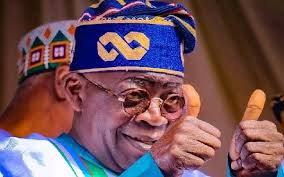
When President Bola Ahmed Tinubu assumed office on 29 May 2023, Nigeria confronted one of the most complex economic and security environments in its contemporary history. The country faced mounting fiscal pressure, persistent exchange rate instability, declining investor confidence, infrastructure deficits, and security threats across several regions.
At the time, many observers agreed that Nigeria required more than routine policy adjustments. The nation needed bold structural reforms capable of resetting the foundations of its political economy.
What has unfolded since then is the emergence of one of the most ambitious reform programmes in Nigeria’s modern governance history. Anchored on the Renewed Hope Agenda, the Tinubu administration has embarked on a comprehensive effort to stabilise the macroeconomic environment, restore fiscal credibility, unlock investment, strengthen national security, and reposition Nigeria within the global economic architecture.
These reforms are not isolated policy actions. They form part of a systemic transformation strategy designed to reposition Nigeria for sustainable growth, economic resilience, and international competitiveness.
Ending the Fuel Subsidy Regime: A Courageous Economic Reset
One of the defining moments of the new administration occurred during the inauguration speech when President Bola Ahmed Tinubu declared that “fuel subsidy is gone.”
For decades, Nigeria maintained one of the most expensive subsidy regimes in the world. In certain fiscal years, subsidy payments exceeded ₦4 trillion, representing a massive drain on government finances. The subsidy system was also widely criticised for benefiting smuggling networks and entrenched middlemen rather than ordinary citizens.
By removing the subsidy, the administration eliminated a major fiscal distortion that had long undermined Nigeria’s financial stability.
The policy has released substantial resources previously lost to subsidy payments, enabling the government to redirect funds toward infrastructure development, social programmes, and economic expansion.
Although the reform initially produced short-term inflationary pressure, it represents a necessary structural correction essential for long-term fiscal sustainability.
Foreign Exchange Market Reform: Restoring Financial Transparency
Another major reform involves the restructuring of Nigeria’s foreign exchange market.
For years, Nigeria operated a complex system of multiple exchange rate windows. This arrangement created arbitrage opportunities, discouraged foreign investment, and complicated business operations.
The Tinubu administration moved toward foreign exchange unification, allowing the naira to reflect market realities while improving transparency in currency transactions.
This reform has several strategic implications. It enhances investor confidence, improves Nigeria’s credibility in global financial markets, and strengthens export competitiveness.
More importantly, it signals a shift toward a rule-based economic framework aligned with international financial best practices.
Fiscal and Tax Reform: Strengthening Nigeria’s Revenue Architecture
Nigeria historically records one of the lowest tax-to-GDP ratios among major economies, often below 10 per cent. Such a weak revenue base significantly limits the government’s capacity to finance development programmes.
Recognising this structural weakness, the Tinubu administration initiated comprehensive fiscal reforms aimed at modernising tax administration and expanding the revenue base.
These reforms emphasise digital tax collection, improved compliance systems, and the elimination of revenue leakages.
A stronger fiscal structure will ultimately reduce reliance on crude oil revenues while enabling the government to fund critical infrastructure and social investment programmes.
Human Capital Development: The Nigerian Education Loan Fund
No nation can achieve sustainable economic transformation without investing in education.
The establishment of the Nigerian Education Loan Fund provides interest-free loans to students pursuing tertiary education, ensuring that financial constraints do not prevent talented young Nigerians from acquiring higher education.
This initiative represents a strategic investment in Nigeria’s intellectual capital. Over time, the programme will strengthen the nation’s workforce, stimulate innovation, and expand opportunities for youth empowerment.
Consumer Credit Reform: Stimulating Domestic Economic Activity
Another important innovation is the introduction of a national consumer credit programme.
Consumer credit systems are essential components of modern economies. They allow households to access financing for essential goods, stimulate manufacturing demand, and expand commercial activity.
By expanding financial inclusion and credit accessibility, the policy is expected to stimulate domestic consumption and support small and medium-scale enterprises across Nigeria.
Energy Transition: The Compressed Natural Gas Initiative
Nigeria possesses some of the largest natural gas reserves in the world. Yet for decades, the country relied heavily on petrol as the dominant transportation fuel.
In response to rising fuel costs following subsidy removal, the administration introduced the Compressed Natural Gas (CNG) Initiative.
The programme promotes the conversion of vehicles to run on compressed natural gas, offering significantly lower fuel costs compared with petrol.
Beyond reducing transportation expenses, the initiative strengthens Nigeria’s energy security while expanding the domestic gas industry.
Revitalising the Power Sector
Electricity supply remains one of the most critical determinants of economic productivity.
The administration has initiated reforms aimed at improving the financial sustainability of Nigeria’s power sector while encouraging private sector investment in generation and distribution.
Improved electricity supply will significantly enhance industrial productivity and reduce the cost of doing business across Nigeria.
Infrastructure Development: Building the Foundations of Growth
Infrastructure investment remains central to Nigeria’s long-term economic transformation.
The Tinubu administration has prioritized expansion of roads, railways, energy systems, ports, and digital connectivity infrastructure.
Infrastructure development serves as a powerful economic multiplier. It stimulates employment, improves commercial efficiency, and enhances national competitiveness.
As infrastructure expands, Nigeria’s capacity for industrialisation and regional trade integration will grow significantly.
Agricultural Transformation and Food Security
Agriculture remains a vital pillar of Nigeria’s economic diversification strategy.
Government policies aim to expand mechanised farming, improve access to agricultural inputs, and support farmers with improved financing and infrastructure.
Strengthening agriculture will enhance food security, reduce rural poverty, and stabilise food prices across the country.
Minimum Wage Reform and Social Protection
Recognising the economic pressures faced by Nigerian workers, the administration approved a ₦70,000 national minimum wage.
In addition, social protection programmes such as cash transfers and welfare support for vulnerable households have been expanded.
These interventions demonstrate a recognition that structural economic reforms must be accompanied by social safety mechanisms that protect citizens during economic transitions.
Strengthening National Security
Security remains the foundation upon which economic development rests.
The Tinubu administration has intensified military and intelligence operations against terrorism, banditry, and kidnapping.
Improved coordination among security agencies, modernisation of intelligence systems, and enhanced operational capabilities are central to the government’s strategy for restoring national stability.
Peaceful communities are essential for agricultural productivity, commercial expansion, and national cohesion.
Livestock Development: Transforming Northern Nigeria’s Economy
A landmark policy initiative of the administration is the establishment of the Federal Ministry of Livestock Development.
Livestock production represents one of the most underdeveloped yet economically promising sectors of Nigeria’s economy, particularly across northern Nigeria.
By modernising livestock production through ranching systems, improved veterinary services, and enhanced value chains in the meat and dairy industries, the government seeks to unlock billions of dollars in economic potential.
The policy also offers a long-term solution to recurring conflicts between farmers and herders.
Oil and Gas Transformation and Domestic Refining
Nigeria’s energy sector is undergoing a significant transformation.
The emergence of the massive Dangote Refinery marks a historic milestone in Nigeria’s industrial development.
Once fully operational, the refinery is expected to process 650,000 barrels of crude oil per day, potentially making Nigeria self-sufficient in refined petroleum products while strengthening export capacity.
Government policies aimed at encouraging domestic refining and gas utilisation will further enhance energy security and economic diversification.
Unlocking the Solid Minerals Sector
Nigeria possesses vast deposits of valuable minerals, including gold, lithium, iron ore, bitumen, and rare earth elements.
Under the supervision of the Federal Ministry of Solid Minerals Development, the government is pursuing reforms designed to transform mining into a major revenue-generating sector.
However, realising this potential requires several strategic actions:
• curbing illegal mining activities
• strengthening regulatory oversight
• improving geological data availability
• encouraging private investment in mineral processing
Developing local mineral processing industries will ensure that Nigeria captures greater economic value rather than exporting raw materials.
With effective policy implementation, the solid minerals sector could become a major pillar of Nigeria’s economic diversification strategy.
Global Recognition of Nigeria’s Reform Programme
Nigeria’s economic reforms have begun attracting international recognition.
Institutions such as the International Monetary Fund and the World Bank have acknowledged the significance of these reforms in restoring macroeconomic stability.
Such recognition strengthens Nigeria’s credibility in global financial markets and enhances prospects for foreign investment.
How the Reforms Are Quietly Reshaping Northern Nigeria’s Economy
One of the less discussed yet strategically important aspects of the reform programme is its potential to transform northern Nigeria’s economic landscape.
Investments in livestock development, agriculture, transportation infrastructure, and security operations are gradually repositioning northern Nigeria as a major hub for agricultural production and agro-industrial development.
Improved road networks and rail connectivity will facilitate the movement of agricultural products from northern farms to southern markets and export ports.
If sustained, these reforms could significantly reduce poverty and unemployment across northern Nigeria.
Nigeria’s Strategic Role in West African Economic Leadership
Nigeria remains the largest economy in West Africa and one of the most influential nations on the African continent.
Successful implementation of the Tinubu reforms could strengthen Nigeria’s position as the economic anchor of the West African region.
A stable and expanding Nigerian economy would stimulate regional trade, attract multinational investment, and enhance Nigeria’s leadership role within regional organisations such as the Economic Community of West African States.
Nigeria’s Emerging Investment Potential
With a population exceeding 220 million people, abundant natural resources, and expanding infrastructure, Nigeria possesses one of the largest consumer markets in the world.
The structural reforms introduced by the Tinubu administration aim to unlock this enormous economic potential.
If sustained, Nigeria could emerge as one of the most attractive investment destinations in Africa over the next decade.
Investors increasingly recognise that countries willing to undertake difficult structural reforms often experience stronger long-term economic growth.
Conclusion: A Defining Moment for Nigeria’s Future
The reform agenda introduced by President Bola Ahmed Tinubu represents a bold attempt to reset Nigeria’s development trajectory.
From subsidy removal and fiscal restructuring to infrastructure expansion, energy transition, agricultural development, mining sector reform, and security stabilisation, the administration has embarked on a comprehensive transformation programme.
Structural reforms of this magnitude inevitably involve short-term challenges. Yet history demonstrates that nations willing to embrace difficult reforms often emerge stronger and more resilient.
Nigeria’s journey toward national renewal has begun.
If sustained with discipline, transparency, and institutional commitment, the Tinubu bold transformative agenda may ultimately prove to be one of the most consequential policy shifts in Nigeria’s economic history—resetting and reshaping the nation for tomorrow’s greatness.
More Stories
SERAP Wants Alleged ₦5.9 billion Spent on Rebranding NNPC to NNPCL Probed
Adeleke, Ede and the Limits of “Edenisation”
Osun Guber: Why the Dance May Be Ending for Governor Adeleke