
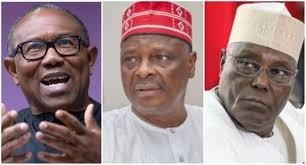
In politics, it is normal for people to have ambition. Everyone wants to grow, to lead, and to win elections. There is nothing wrong with that. However, in a democracy like Nigeria, there is a right way to pursue power. When people try to gain control without following the proper process, it becomes dangerous. That is why what is currently happening in the African Democratic Congress (ADC) needs careful attention.
Some well-known political figures, such as David Mark, Atiku Abubakar, Rauf Aregbesola, Rotimi Amaechi, and Peter Obi, are now linked with moves inside the ADC. On the surface, this looks like normal politics—people coming together to form alliances. But the way it is being done is raising serious concerns.
In Nigeria, political parties must follow clear rules. If a party wants to change its leadership or structure, it must hold proper meetings or conventions. These must be done openly and must involve the Independent National Electoral Commission (INEC). This is not just a formality—it is what gives legitimacy.
Think of it like building a house. You cannot skip the foundation and start with the roof. Even if the house looks fine at first, it will collapse eventually. In the same way, any political arrangement that ignores due process will eventually run into problems.
This is where the issue with the ADC becomes worrying. The situation gives the impression of a group that is in a hurry—people who want to take control quickly without carefully following the rules. But in politics, speed without structure often leads to failure.
The concern becomes even stronger when we consider a recent criticism linked to Bola Ahmed Tinubu. In what many see as a mocking but strategic comment, the President referred to the record of one of the key figures in the ADC coalition. According to this criticism, the individual was once given the responsibility to privatise major national industries.
Examples mentioned include the Delta Steel Company, the Ajaokuta Steel Company, and the Aluminium Smelter Company of Nigeria. The claim is that these projects did not succeed as expected.
The lesson being suggested here is simple: if someone did not follow proper process in managing important national assets, and those efforts failed, then applying the same approach to politics may also lead to failure.
To make it clearer, imagine a manager who was given a large company to run but did not follow proper procedures, and the company collapsed. If that same manager is given another company and still refuses to follow due process, what result should we expect? The same failure.
This is the fear many observers now have about what is happening in the ADC.
What makes the situation more surprising is that the people involved are not new to politics. They are experienced leaders. They know the rules. They have worked in government and understand how institutions function. So when such people appear to ignore due process, it raises serious questions. Why are they in such a hurry? Why are they not following the rules they already know?
Nigeria has seen a better example before. When the All Progressives Congress (APC) was formed, it was not rushed. Different groups came together carefully. They held meetings, followed legal steps, and ensured everything was properly done. It took time, but in the end, it was solid and credible.
What we are seeing in the ADC now looks like the opposite. It appears as if the goal is to take control first and fix the process later. But politics does not work that way. You cannot correct a wrong foundation after building on it.
There is also the issue of public trust. Nigerians today are more aware and more observant. People are watching closely. When they see actions that look rushed or not properly done, they begin to lose confidence. It reinforces the belief that some politicians care more about power than about doing things the right way.
Another concern is the tendency to blame others. Instead of looking inward to correct mistakes, there are signs that some people are blaming the President and the APC for their challenges. But this does not solve anything.
If a student fails an exam, blaming the teacher will not improve the result. The student must go back, study properly, and correct the mistakes. The same applies in politics.
If those working within the ADC truly want to present themselves as a strong alternative for Nigerians, then they must do things properly. They must follow the law, respect procedures, and build their structure step by step. There is no shortcut to credibility.
The key message here is clear: power without process is unstable. Any political structure built on weak foundations will struggle to survive. It may look strong at the beginning, but over time, cracks will appear.
Nigeria needs stability, maturity, and discipline in its political system. Leaders must not only seek power—they must also respect the rules that make that power legitimate.
In the end, the success of any political movement is not determined by how fast it rises, but by how well it is built. And without due process, no structure—no matter how powerful—can stand for long.
More Stories
INEC Complies with Electoral Act, Publishes Voter Register Online
NIMASA, ITF Back Seafarer Wellbeing MoU
Do Not Pity President Tinubu