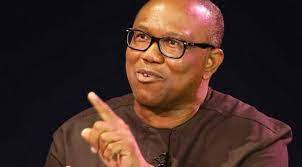
Peter Obi has every legitimate right to contest Nigeria’s presidency in 2027. His decision to contest in 2023 was equally legitimate and, given the political circumstances of that election, understandable.
But politics is not only about the right to contest. It is also about timing, strategy, and the long-term interests of the people one seeks to represent.
That is why the South-East must ask a difficult but necessary question: Is Peter Obi’s 2027 presidential ambition strategically serving the Igbo people’s long-term presidential aspirations, or could its timing unintentionally weaken that prospect?
2027 is not 2023.
The political architecture of Nigeria has changed considerably. New alliances are emerging, old political calculations are being rewritten, and the relationship between the regions and the Federal Government is undergoing significant transformation.
This is precisely why the South-East must look beyond one presidential election and begin to think strategically about the next decade.
NIGERIA MAY FINALLY BE CONFRONTING ITS FEDERAL QUESTION
For decades, Nigerians have complained about an over-centralised federation.
We have spoken endlessly about restructuring, devolution of powers, fiscal federalism, resource control and allowing the different parts of Nigeria greater responsibility to determine the pace and direction of their development.
Today, whether one agrees with every policy of President Bola Ahmed Tinubu or not, it is difficult to ignore the direction of some of the reforms being undertaken by his administration.
The Federal Government has explicitly linked its reforms to stronger subnational economies and fiscal federalism, while states have gained greater responsibility in areas such as electricity under the Electricity Act.
There are also constitutional proposals before the National Assembly aimed at transferring additional responsibilities from the Federal Government to the states. These proposals are still subject to the constitutional process and should not be mistaken for completed reforms.
I therefore describe what Nigeria is presently undergoing as a surgical and clinical political operation—an attempt to correct structural weaknesses that have frustrated the Nigerian federation for decades.
If completed, the objective should be a federation in which the regions and states possess greater capacity to develop according to their circumstances, compete productively with one another and contribute more effectively to national prosperity.
That is the Nigeria many of us have demanded for generations.
THIS IS NOT THE MOMENT TO ABANDON THE OPERATION
This is where every Nigerian should pause.
If the present reform direction ultimately produces a more functional federal arrangement, stronger subnational economies and genuine regional competition, it would represent one of the most consequential political transformations in Nigeria’s post-independence history.
It therefore deserves serious national attention and constructive support.
Support does not mean surrender. Support does not mean that Nigerians should stop asking questions. Support does not mean that the government should not be criticised where it fails.
It simply means that where an administration is attempting to address a structural problem that successive governments have discussed without resolving, Nigerians should give the process the opportunity to mature.
Nigeria cannot continue to demand restructuring and simultaneously resist every political process that could potentially produce it.
WHERE DOES PETER OBI FIT INTO THIS?
This is where Peter Obi’s ambition deserves a sober examination. The question is not whether Obi is qualified to contest. The question is whether another presidential contest at this particular point advances the South-East’s larger political objective.
The South-East is politically sophisticated enough to understand that winning the presidency requires more than regional popularity. It requires national coalition-building, political relationships and the confidence of Nigerians outside one’s immediate constituency.
The ultimate objective should not simply be to produce an Igbo presidential candidate. It should be to produce an Igbo President of Nigeria. Those are not necessarily the same thing. A candidate can command enormous support in one region and still struggle to construct the broad national coalition required to govern Nigeria. That is why political strategy must sometimes look beyond the immediate election.
THE SOUTH-EAST MUST THINK BEYOND 2027
The South-East has produced some of Nigeria’s greatest political minds and statesmen—Nnamdi Azikiwe, Michael Okpara, Kingsley Mbadiwe and others whose contributions to Nigeria went beyond regional politics.
The question before today’s generation is whether that political sophistication can be converted into a long-term national strategy.
Where will the South-East be politically in 2030? In 2035? What relationships will it have built with the South-West, North, South-South and Middle Belt? How many young political leaders will have been prepared for national leadership? How much influence will the region command in the National Assembly? How strong will its economic and political alliances be? These questions may ultimately matter more than the outcome of one presidential election.
LET NOT AMBITION DESTROY AN OPPORTUNITY
The greatest danger is not Peter Obi contesting. The danger is allowing individual presidential ambition to fracture emerging political relationships at a moment when Nigeria may be approaching an important structural turning point.
The South-East and South-West, in particular, must not allow the wounds and rivalries of the First Republic to become permanent political inheritance.
The political history between Azikiwe and Awolowo should teach us that legitimate regional aspirations must be managed within a larger national framework.
Today, there is an opportunity to build a different relationship between the two regions—and indeed among all the regions of Nigeria. That opportunity should not be sacrificed on the altar of one presidential ambition.
THE PRESIDENT SHOULD BE GIVEN THE SPACE TO COMPLETE THE REFORM
President Tinubu has been given a mandate to govern Nigeria. His administration should therefore be allowed to complete the structural reforms it has initiated and be judged on the results.
If the administration succeeds in moving Nigeria towards a more genuinely federal system, with stronger states and regions, greater economic competitiveness and more effective devolution of responsibilities, every Nigerian region stands to benefit.
The North will benefit. The South-West will benefit. The South-East will benefit. The South-South will benefit. The Middle Belt will benefit. Nigeria will benefit. This should therefore not be reduced to a Tinubu-versus-Obi argument. It is bigger than both men.
It is about whether Nigeria can finally move from talking about restructuring to actually restructuring the way power and economic responsibility are distributed within the federation.
OBI SHOULD THINK BEYOND THE PRESIDENCY
Peter Obi has already made an important contribution to Nigerian political discourse. His 2023 campaign demonstrated that a presidential movement could mobilise millions of Nigerians around issues of governance, accountability and economic management.
That political capital should not necessarily be measured only by whether he eventually occupies Aso Rock. There are moments in history when leadership means pursuing an office.
There are other moments when leadership means recognising a larger national opportunity and helping to create the conditions for it to succeed. Obi has an opportunity to demonstrate that distinction.
THE SOUTH-EAST MUST NOT MISS ITS HISTORIC MOMENT
The South-East’s presidential aspiration is legitimate. But legitimacy alone is not strategy. If the region genuinely wants to produce a President of Nigeria, it must build the broadest possible national coalition for that eventuality. It must cultivate relationships. It must reduce unnecessary political suspicions. It must engage other regions. It must develop political patience.
And it must understand that national leadership is won not merely by demanding one’s turn but by convincing the rest of Nigeria that one’s turn is also good for Nigeria. That is the difference between regional ambition and national leadership.
CONCLUSION
Peter Obi has every right to contest the 2027 presidential election. But the South-East has an even greater responsibility to think beyond Peter Obi. Nigeria is at a potentially important crossroads. For decades, we have demanded a federation where states and regions can develop according to their capacities, compete healthily and control greater aspects of their economic destiny.
If the current political process is genuinely moving Nigeria in that direction, then this is not the time to undermine it with unnecessary regional confrontation or short-term political calculations.
Every region should give the ongoing reform process the necessary support, while retaining the democratic right to scrutinise, question and criticise government.
The objective should be clear: a Nigeria where no region has to beg the centre for permission to prosper. A Nigeria where the North can develop the North, the South-West can develop the South-West, the South-East can develop the South-East, the South-South can develop the South-South, while all regions remain competitive partners within one prosperous federation. That is the promise of genuine federalism. That is the political operation Nigeria has postponed for too long.
And if there is finally an opportunity to perform that operation, no individual presidential ambition—however legitimate—should be allowed to jeopardise it. The South-East should think beyond 2027. Nigeria should think beyond 2027. And our political leaders must learn that sometimes the greatest victory is not winning the next election but creating the political architecture that makes tomorrow’s victory possible.
Obi’s 2027 Presidential Bid: Is the Timing Unfavourable to the South-East?
More Stories
Do Not Pity President Tinubu
Still on Osun and the Election That Was (1)
Osun Guber Polls: Lessons from Ekiti – (1)