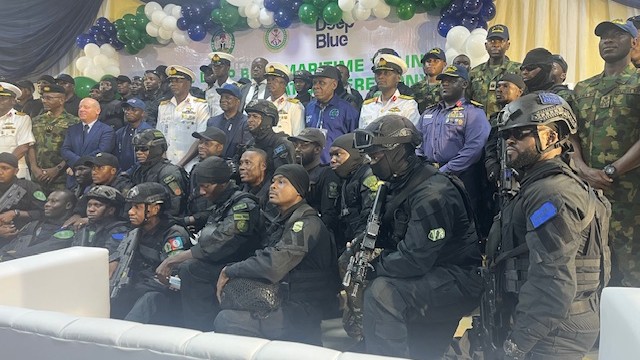
It was a celebratory Tuesday for the agencies responsible for securing Nigeria’s maritime domain and the Gulf of Guinea, marked by a demonstration of Nigeria’s maritime capabilities at the 2026 graduation of 177 members of the Deep Blue Maritime Security Unit.
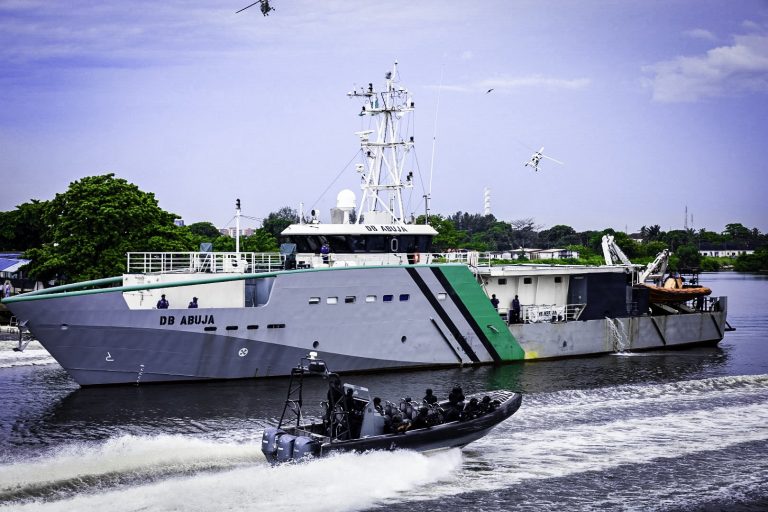
The ceremony was preceded by an operational demonstration in which the trainees responded to a simulated pirate attack on a vessel using speedboats. They were supported by personnel of the Armed Forces—the Navy, Army, and Air Force—using helicopters and attack aircraft.
With assurances to ensure the sustainability of the Deep Blue Project, the Director General of the Nigerian Maritime Administration and Safety Agency (NIMASA), Dr Dayo Mobereola, noted that Nigeria has recorded zero maritime piracy incidents for four years, strengthening global confidence, lowering war-risk premiums, and supporting its election to IMO Category C.
He attributed these achievements to the Deep Blue Project, strong government and stakeholder support, effective inter-agency collaboration, ongoing capacity building, and the leadership of the Honourable Minister of Marine and Blue Economy, Alhaji Adegboyega Oyetola.
He urged the fresh graduands, who comprised 33 Special Mission Vessel Officers, 14 Special Mission Vessel Engineers, 107 Fast Intervention Boat drivers, technicians, and boarding team members, as well as 23 helicopter operations personnel, to uphold professionalism, discipline, patriotism, and integrity. Partnerships with security agencies and stakeholders remain vital to sustaining progress and building a safe, resilient maritime sector that supports economic growth in Nigeria and the Gulf of Guinea.
According to Mobereola, the personnel underwent rigorous training programmes designed to improve operational efficiency, intelligence coordination, and rapid response capabilities within Nigeria’s maritime domain.
The training covered helicopter operations, medical evacuation, vessel landing and clearing, interceptor boat tactical operations and manoeuvres, communications, unmanned aerial systems capabilities, and first aid and combat medic procedures.
DG NIMASA further said, “We are confident that the knowledge and skills acquired during this programme will further help sustain the security gains already recorded in our waters.
The DG NIMASA, Dr Dayo Mobereola, noted that the successes recorded contributed immensely to Nigeria’s election into the Category C of the International Maritime Organisation (IMO).
“Permit me at this juncture to specially appreciate the sustained support of the Honourable Minister of Marine and Blue Economy, His Excellency Adegboyega Oyetola, CON, whose dedication to the growth of the maritime sector and the advancement of the Blue Economy agenda has continued to inspire the Agency’s operations and strategic direction.
“Let me congratulate all the graduands for completing this important training programme. The task ahead is enormous, and what Nigeria expects from you is the highest level of professionalism, discipline, patriotism, and integrity.
He expressed NIMASA’s appreciation to fellow collaborators: “Let me appreciate our partners, particularly the Nigerian Armed Forces, Homeland Security International (HLSI), the Department of State Services (DSS), the Nigerian Police Force, other security agencies, and all stakeholders whose support has contributed to the success of this programme, I wish to reiterate the shared vision to ensure the sustainability of the Deep Blue Project.
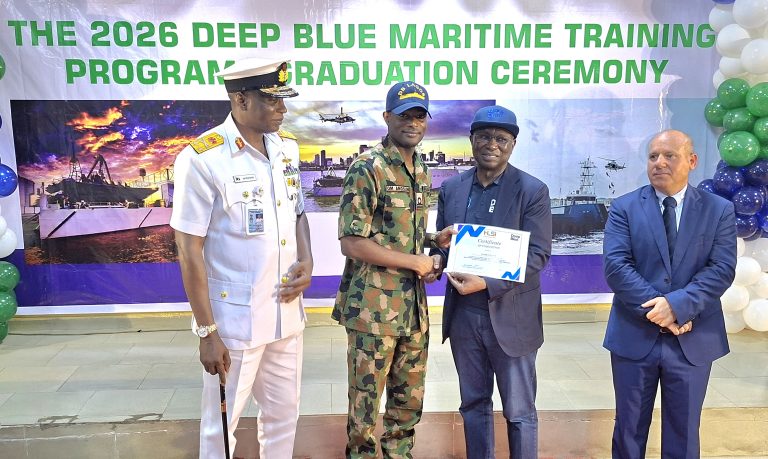
“It is our commitment to strengthen these partnerships for the overall progress of the Nigerian maritime industry. Together, we shall continue to build a maritime sector that is safe, secure, resilient, and capable of driving sustainable economic growth for Nigeria and the entire Gulf of Guinea.”
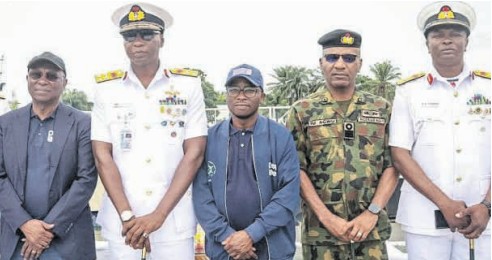
Speaking at the ceremony, Chief of Naval Staff Vice Admiral Idi Abass said the graduation reflected the strong collaboration among the Nigerian Navy, NIMASA, and other security agencies in strengthening maritime security in Nigeria and the Gulf of Guinea. He was represented by Rear Admiral Abdulahi Mustapha, Flag Officer Commanding, Western Naval Command.
Abass described the Deep Blue Project as a strong model of interagency collaboration, adding that the maritime sector still faces evolving threats that require vigilance, professionalism, cooperation, and sustained capacity building among security personnel.
Commending NIMASA, he said, “The agency has continued to play a strategic role in supporting initiatives aimed at strengthening maritime governance and operational effectiveness in the Nigerian maritime space. I therefore appreciate the instructors and facilitators of the Deep Blue whose dedication and professionalism have contributed immensely to the success of this programme,” he said.
Abass urged the graduands to apply their training with discipline and commitment in protecting Nigeria’s maritime environment and advancing the nation’s blue economy goals.
“The Nigerian Navy, in partnership with NIMASA and other stakeholders, will continue to strengthen collaboration to deny criminal elements freedom of action in our maritime domain,” he said.
In her welcome address, NIMASA’s Head of the Deep Blue Project, Mrs Gladys Owolabi, said sustainability remains central to the project’s progress and improvement. She added that this includes extensive training, maintenance, and effective coordination of the assets and platforms deployed under the project.
More Stories
Osun Election: If You Ask Me…
NIMASA: How Mobereola Is Tackling Challenges and Building Momentum
Federal and Oyo Governments Celebrate Release of Abducted Schoolchildren, Teachers